CZ
CZ  PL
PL  SK
SK 
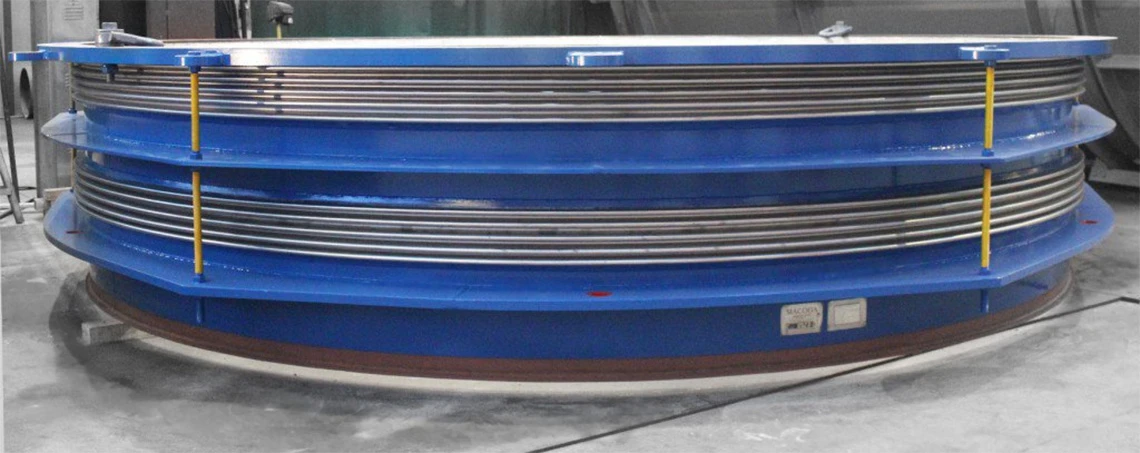
Lateral movement is the relative displacement from one end of the bellows to the other end in a direction perpendicular to its longitudinal axis.
Although single bellows expansion joints may allow some lateral movement, the most commonly used to absorb lateral movement generally incorporate two bellows (Universal Expansion Joints) and a double system of tie rods or hinge/gimbal that allow them to move laterally while restricting the thrust due to internal pressure.
The Expansion Joints most used to absorb lateral movement are the following:
These expansion joints are made of one single bellows element with end connections plus a tie rod system.
Regardless of accessories, such as liners and covers, this model absorbs all types of movements in any length of piping but it is mainly used to absorb axial movements and small amounts of lateral movement.
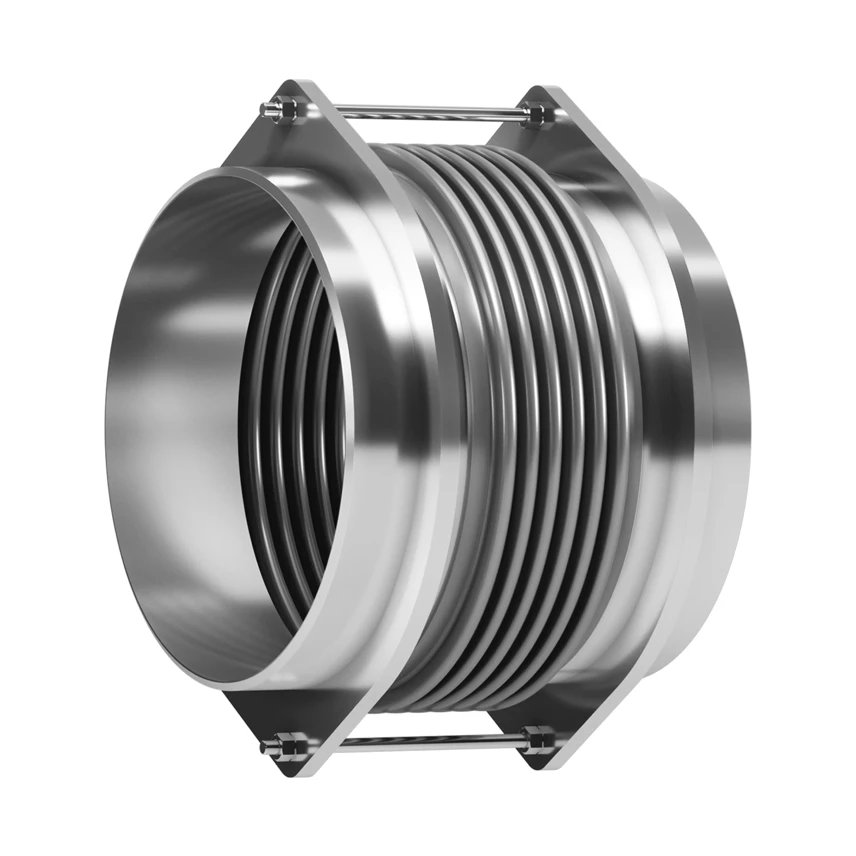
This type of Expansion Joint is made up of one single bellows provided with welding ends.
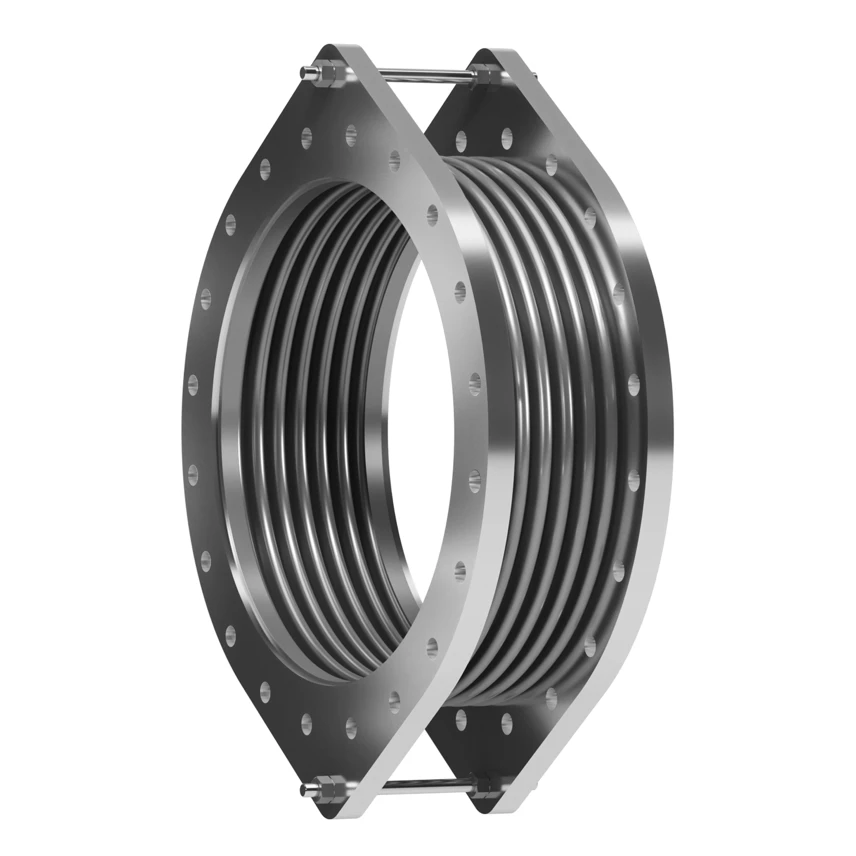
This type of Expansion Joint is made up of one single bellows equipped with fixed flanges.
Also known as the universal un-tied expansion joint this model is made up of two bellows joined together by a central pipe.
Although it can be used to absorb any combination of the three basic movements it is mainly used to absorb large lateral movements.
The amount of lateral deflection that can be accepted is a function of the degree of angulation each bellows can absorb and the distance between the bellows or length of the central pipe.
It does not restrain pressure thrust so adequate anchors and guides must be provided and they can be used only in a piping systems that incorporate correctly designed anchors and pipe alignment guides.
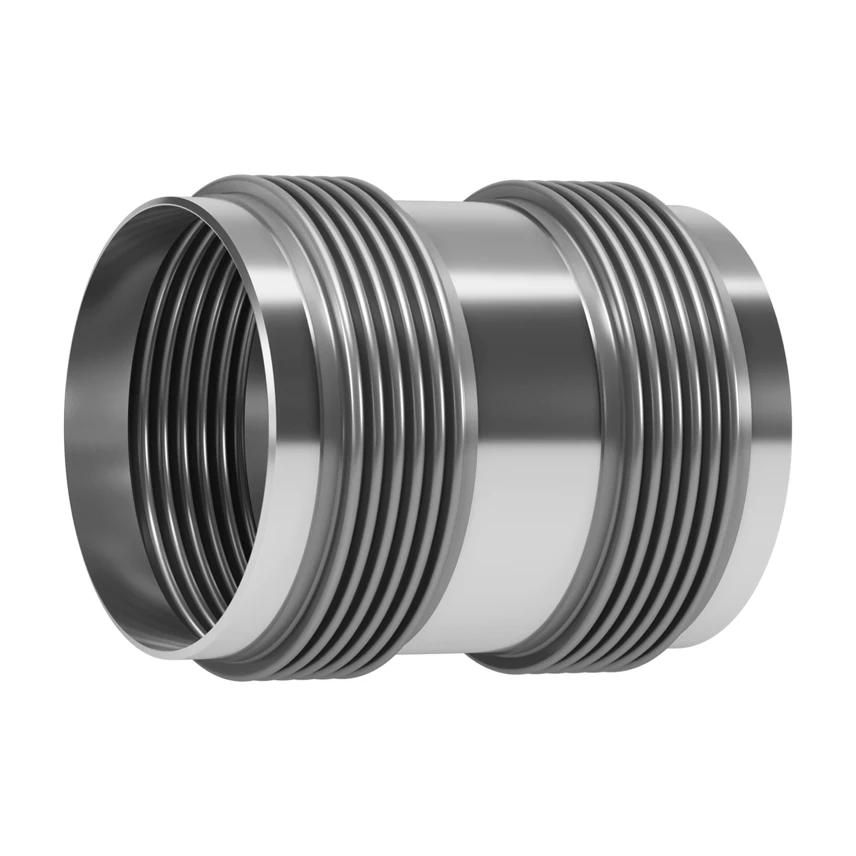
This type of Expansion Joint is made up of two bellows joined together by a central pipe provided with welding ends.
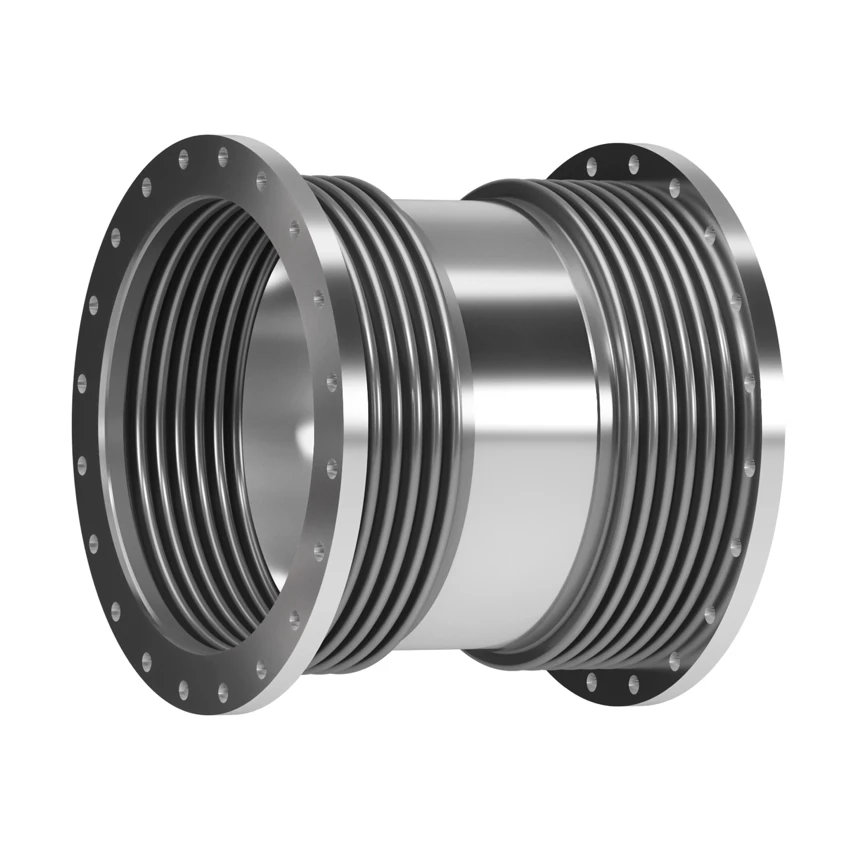
This type of Expansion Joint is made up of two bellows joined together by a central pipe provided with flanged ends.
This model is made up of two bellows joined together by a central pipe and a system of tie rods able to withstand the thrust produced by the internal pressure.
This model is used to absorb lateral movements in all planes. In addition and with a special design and/or positioning of the tie rods system this type may be used to absorb some axial and angular movements*.
The tie rods are provided in sets of two or more, equally distributed around the circumference of the expansion joint. When the Expansion Joint is supplied with 2 tie rods at 180 degrees, the expansion joint is free to deflect angularly and laterally. With three or more tie rods only lateral deflections are possible.
The amount of lateral deflection depends on the amount of angulation each bellows can absorb and the length or the central pipe. The amount of lateral deflection capability can be increased or decreased by simply changing the length of the spool pipe and the thermal expansion of the central pipe is taken by the bellows elements.
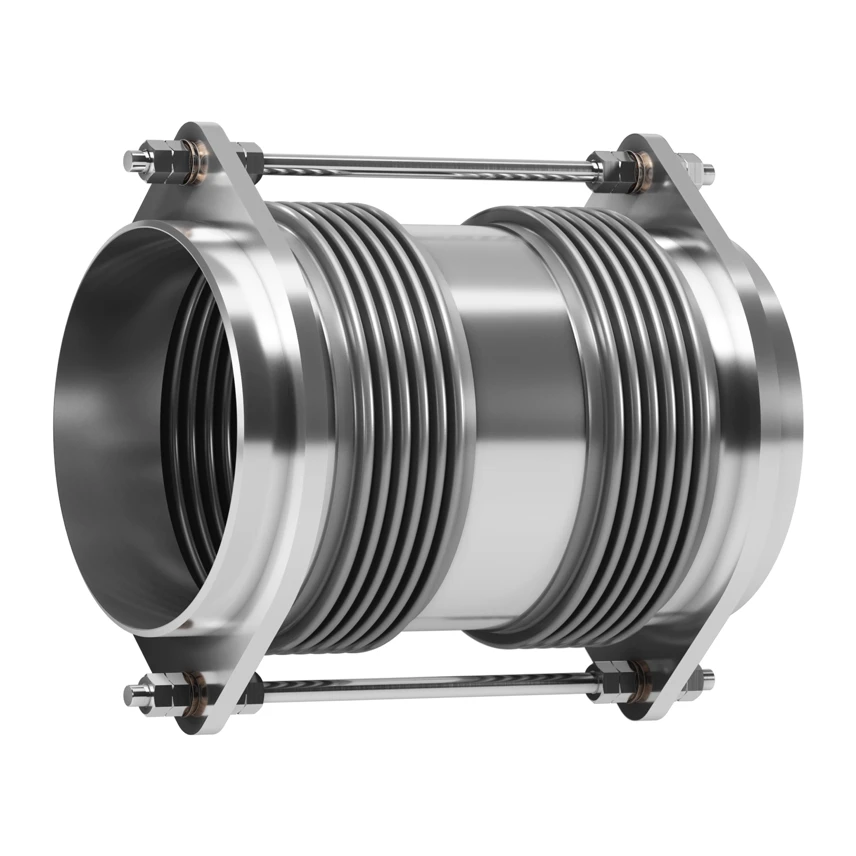
Universal Lateral Tied Expansion Joint with welding ends.
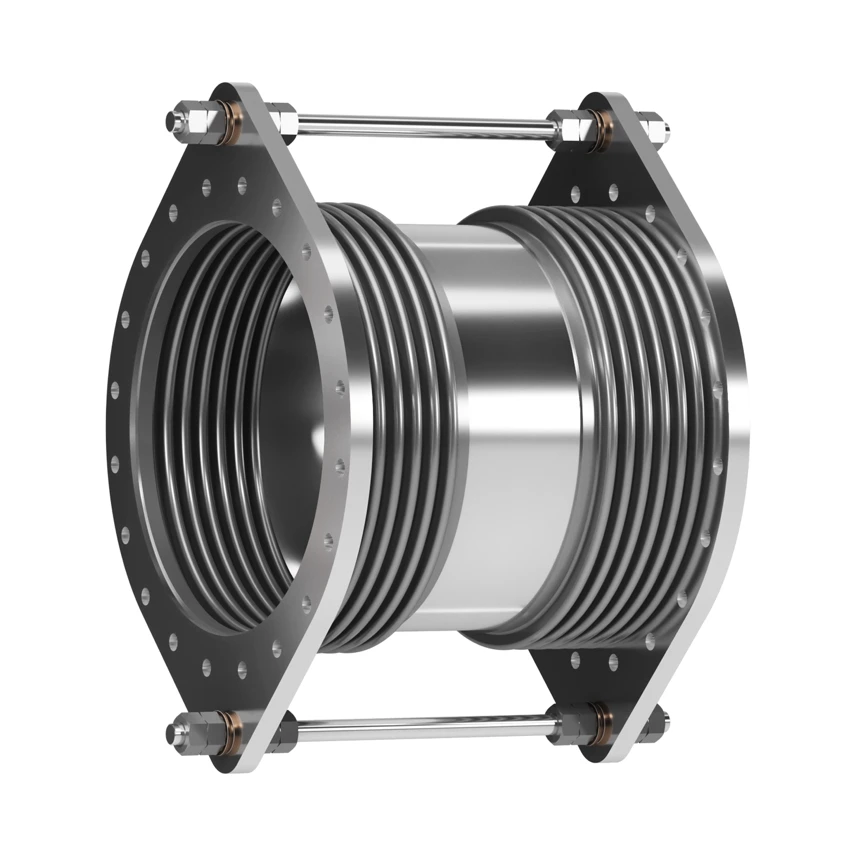
Universal Lateral Tied Expansion Joint with flanged ends.
This model is designed to absorb lateral and angular movements in only one plane.
It is made up of two bellows joined together by a linking pipe and fitted with welding ends or flanges plus a double articulated system.
The hinge mechanisms are designed to contain pressure thrust.
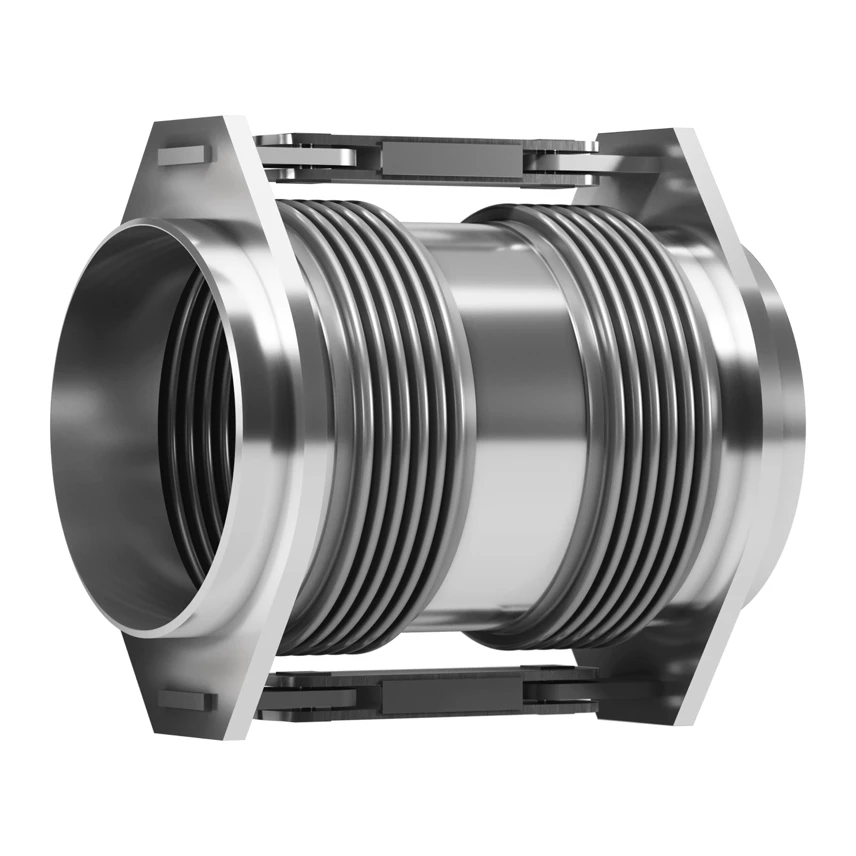
Double Hinged expansion joint with welding ends.
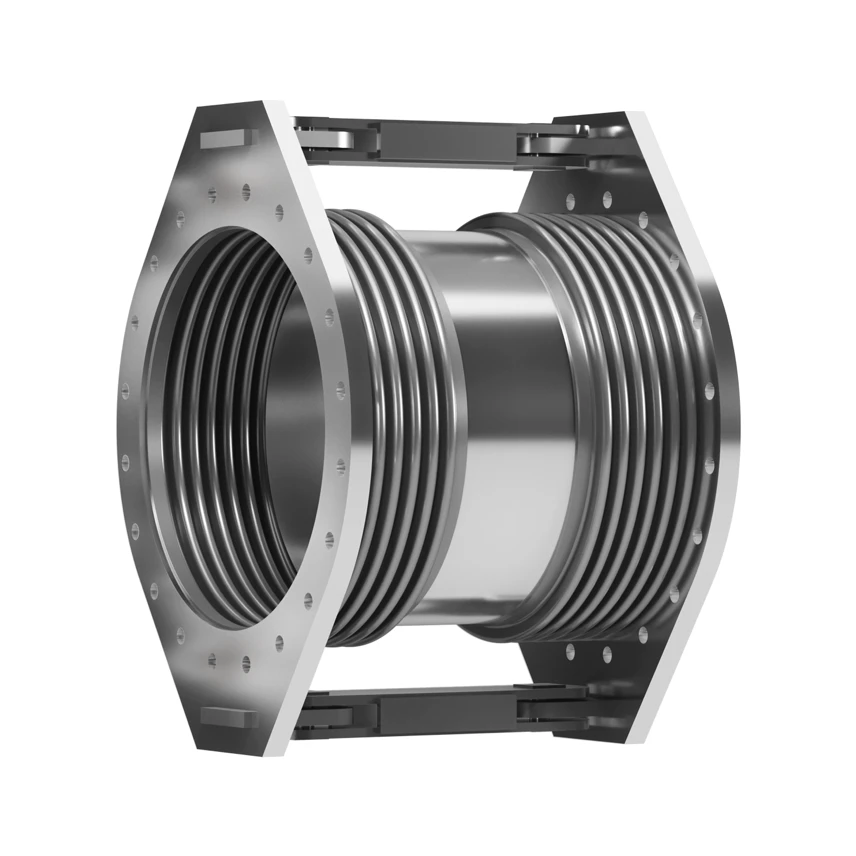
Double Hinged expansion joint with flanges.
Designed to absorb lateral movements in any direction and angular movements in one plane only. This model is made up of two bellows joined together by a linking pipe and a universal system of double articulated supports.
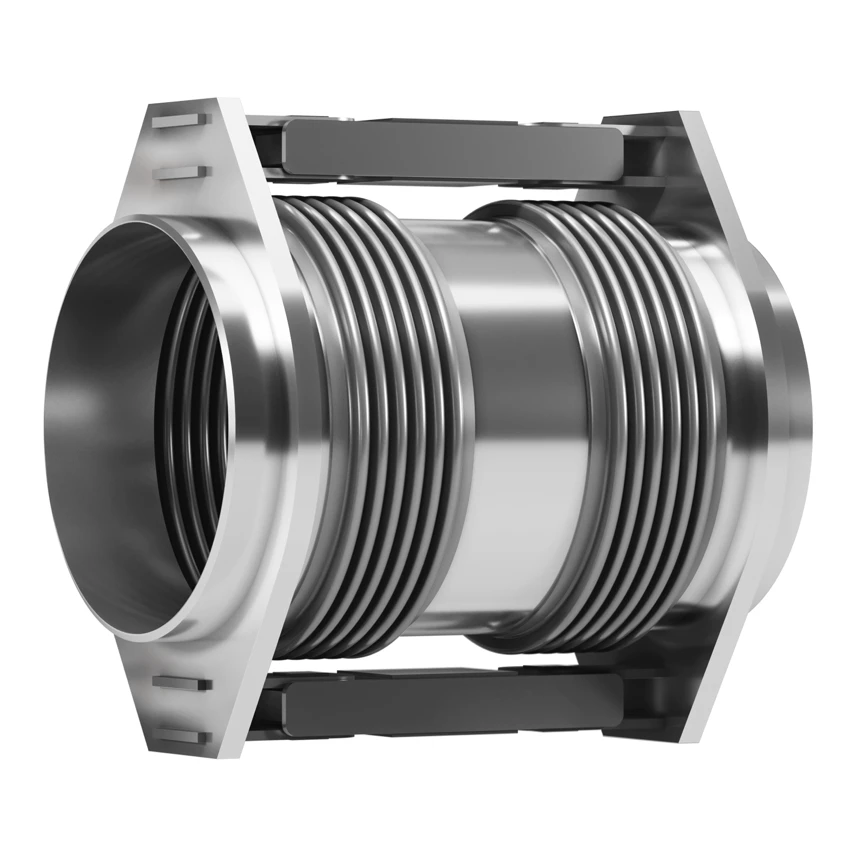
Double Articulated expansion joint with welding ends.
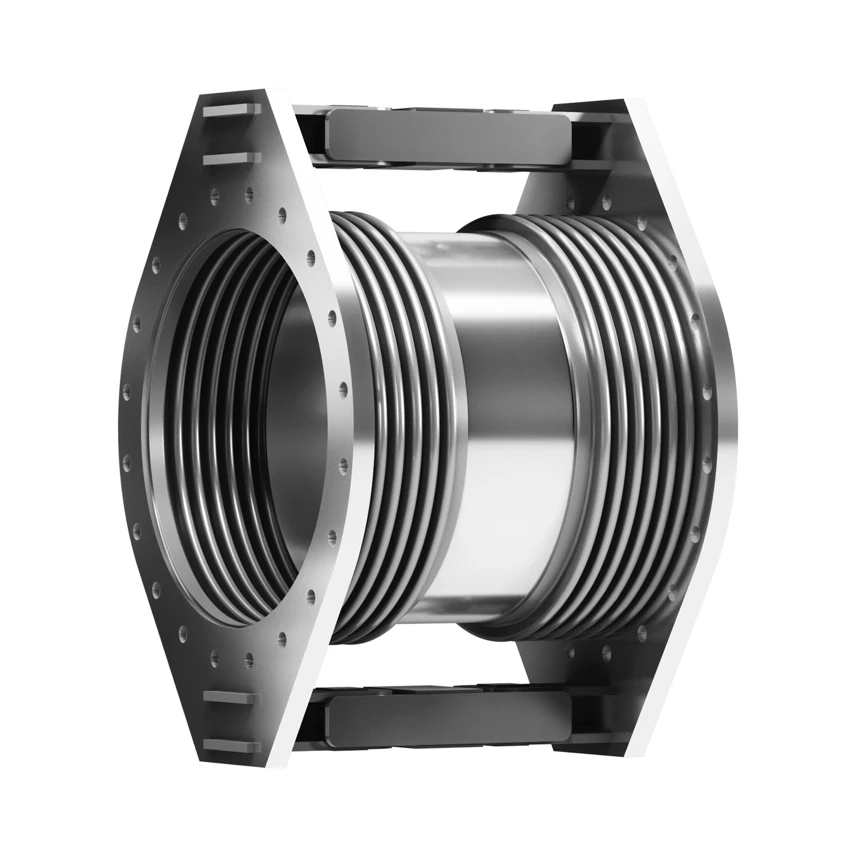
Double Articulated expansion joint with flanges.
Designed to absorb lateral and angular movements in any direction. This model is made up of two bellows joined together by a linking pipe and a double cardan system.
A double gimbal expansion joint is basically a two single gimbal expansion joints and an intermediate pipe that joins them. This type of Expansion Joint can absorb a large lateral movement in any plane and angular movement in any direction.
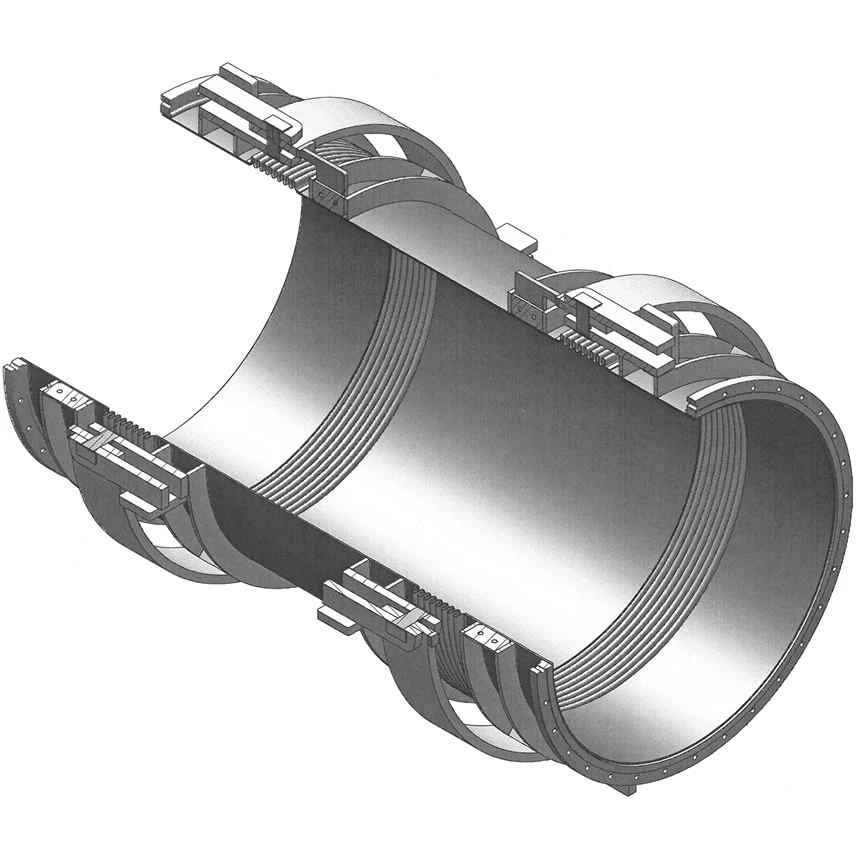
Double gimbal expansion joint with flanges or welding ends
A pressure balanced expansion joint accommodates axial and lateral movements and counteracts the bellows pressure thrust. An additional bellows is incorporated into the unit and is subject to the line pressure to generate a force equal and opposite to that on the main bellows. Tying these bellows together neutralises the pressure load on the unit.
The Pressure Balanced Expansion Joints are used in situations similar to those described for the Axial and/or Lateral Expansions although this particular type of Expansion Joint offers the additional advantage of not transferring the thrust caused by the internal pressure to the pipes or adjacent equipment. This characteristic is especially important when it comes to joining the pipes to turbines or other delicate equipment which, by their nature, are unable to withstand these extra loads.
The only loads on the equipment are the sum of the forces required to move the line bellows and balancing bellows of the expansion joint.
This type of Joint can be fitted between intermediate fixed points so main anchoring of the pipe or adjacent equipment is not required.
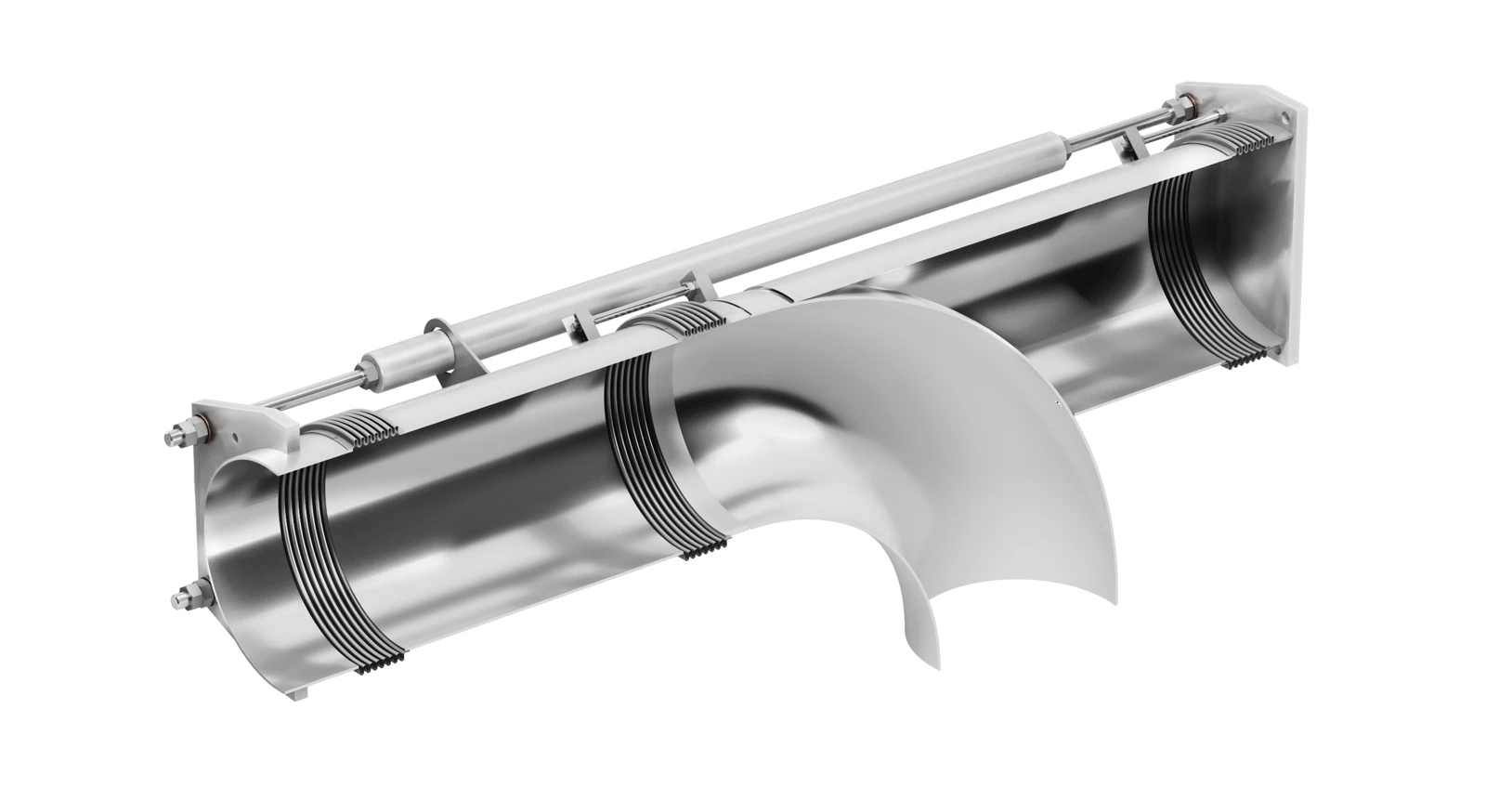
Designed to absorb lateral and/or axial movements eliminating the thrust caused by the internal pressure.
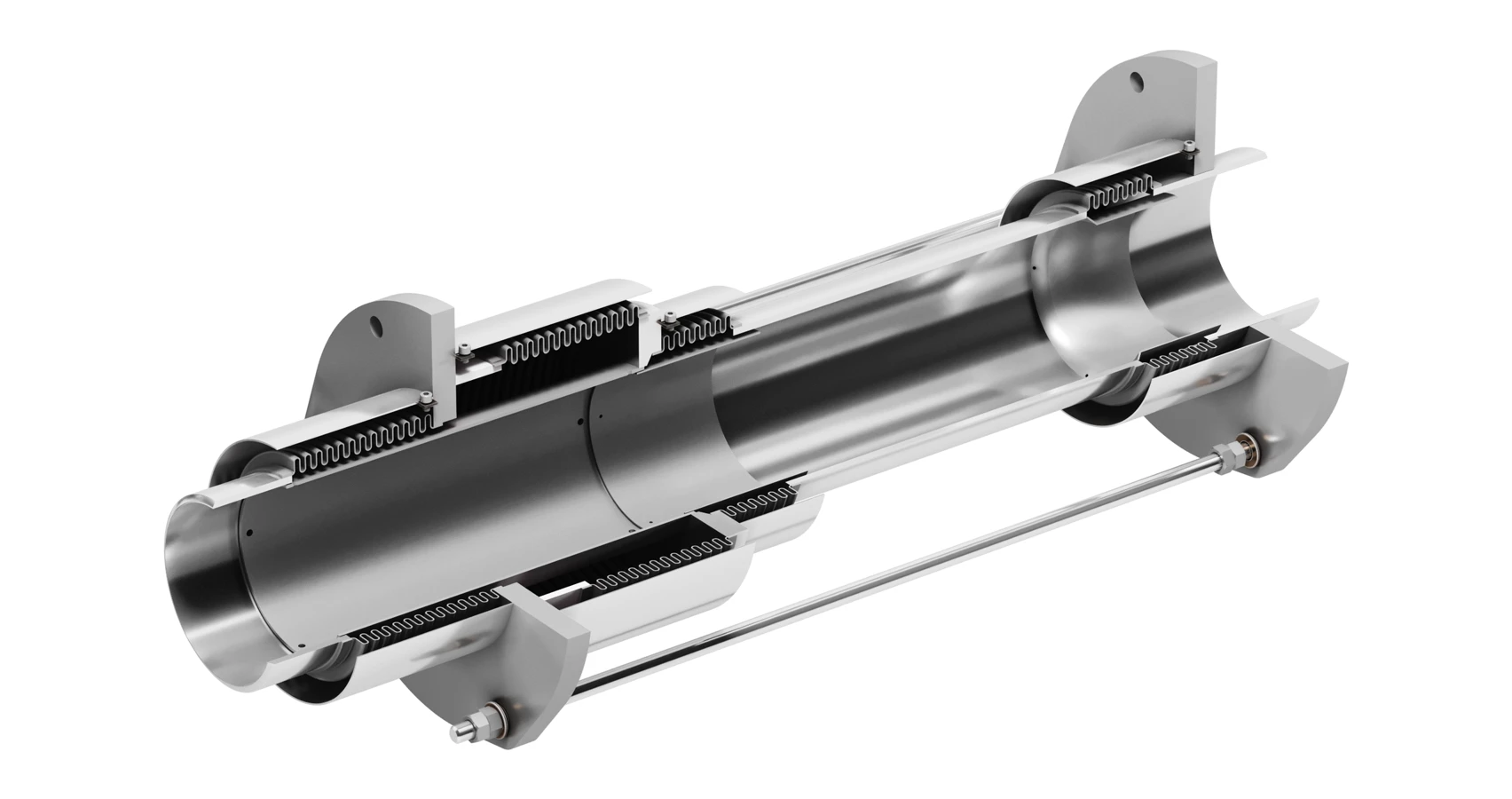
Absorbs Axial and/or Lateral Movements while restraining the pressure thrust. This type of Expansion Joint is used in a straight run of pipe.
Inquiry Form